


Modern Sideboard Buying Guide: Best Places to Shop in India (2026)
Modern Sideboard Buying Guide: Best Places to Shop in India (2026)
Looking for the perfect sideboard to elevate your living space? We understand how overwhelming it can be to choose from dozens of options while staying within your budget.
Whether you’re searching for a sleek sideboard cabinet for your living room or a functional buffet sideboard for your dining area, the market offers incredible variety. In fact, popular Indian retailers showcase over 27 different models ranging from ₹83,000 to ₹129,000, each with unique designs and features. Modern sideboard styles have evolved dramatically, combining storage functionality with statement esthetics that can transform any room.
Throughout this comprehensive guide, we’ll help you navigate the world of sideboard cabinet designs and show you the best places to shop for wooden sideboards in India. From kitchen sideboards to elegant sideboard tables for your living room, we’ve got all the information you need to make a confident purchase decision in 2026.
Key Takeaways
Modern sideboards have become essential furniture pieces in Indian homes, combining storage functionality with contemporary esthetics to address space optimization needs in urban living.
• Measure twice, buy once: Ensure 36-48 inches width for small rooms, maintain 14-18 inches depth, and leave 36 inches walking space for optimal placement.
• Prioritize solid wood construction: Sheesham, teak, and mango wood offer superior durability and humidity resistance compared to engineered alternatives in Indian climates.
• Choose storage based on purpose: Combine closed cabinets for clutter, drawers for small items, and minimal open shelving for the most practical organization.
• Focus on quality hardware: Inspect drawer runners, hinges, and stability before purchasing—poor hardware leads to premature wear regardless of material quality.
• Style with restraint: Use one statement piece, minimal decorative objects, and negative space to create a premium, uncluttered appearance.
The key to successful sideboard shopping lies in balancing functionality with esthetics while ensuring the piece fits your specific space and storage requirements. Whether you choose a traditional wooden cabinet or a contemporary marble-topped design, proper measurement and quality assessment will ensure your investment serves you well for years to come.
What Is a Modern Sideboard and Why It’s Trending in 2026
Modern sideboards have become a cornerstone of contemporary interior design across Indian homes. Their rise to prominence isn’t just about following design trends—these versatile furniture pieces offer practical solutions for modern living spaces.
Definition and Purpose
A modern sideboard is a low, elongated storage piece typically positioned against a wall in dining rooms, living areas, or entryways. Unlike its traditional counterparts, today’s sideboard serves multiple purposes beyond mere storage. The fundamental purpose of a sideboard cabinet is threefold: storage, display, and functionality.
Most modern sideboards feature a combination of closed cabinets, drawers, and sometimes open shelving. This versatility allows them to house everything from dinnerware and linens to entertainment equipment and decorative items. The flat top surface provides valuable display space for lamps, artwork, or decorative objects, essentially creating a functional focal point in the room.
What sets modern sideboards apart is their dual nature as both utilitarian furniture and style statements. A wooden sideboard can anchor a dining space while providing essential storage for tableware. Meanwhile, a sleek sideboard for living room use might conceal media equipment while displaying curated decorative pieces.
Modern sideboards have evolved to address contemporary needs. Many designs now include features like cable management systems, adjustable shelving, soft-close mechanisms, and specialized compartments for specific items. This adaptability makes them particularly valuable in Indian urban homes where space optimization is essential.
Modern vs Traditional Sideboards
The distinction between modern and traditional sideboards goes beyond mere esthetics. Traditional sideboards (often called buffets) typically feature ornate detailing, curved lines, and darker wood finishes. They usually stand on legs or feet and display intricate carvings or inlay work reflecting classical design elements.
Modern sideboard designs, conversely, embrace:
- Clean, geometric lines with minimal ornamentation
- Lower profiles that create a sleeker silhouette
- Mixed material compositions (wood combined with metal, glass, or stone)
- Lighter color palettes or high-contrast combinations
- Innovative storage solutions and configurations
The materials used also mark a significant difference. Traditional sideboards predominantly use solid hardwoods like teak, mahogany, or rosewood throughout. A contemporary sideboard cabinet often combines engineered woods with metal accents, marble tops, or glass elements. Modern designs frequently incorporate sustainable materials and manufacturing processes, reflecting current environmental consciousness.
Functionality represents another key difference. Traditional buffet sideboards were primarily designed for dining room storage and serving. Modern sideboard designs have expanded their utility across multiple rooms and functions. Today’s kitchen sideboard might feature specialized wine storage, while a sideboard table in the living room could conceal home office equipment.
Modern sideboards also tend to prioritize modularity and adaptability. Many contemporary designs feature adjustable or removable components that can be reconfigured as needs change—a practical advantage in today’s dynamic living environments.
Why It’s Popular in Indian Homes
The growing popularity of modern sideboards in Indian homes stems from several cultural and practical factors. Firstly, as urban living spaces in India become more compact, furniture that combines multiple functions without sacrificing style has become increasingly valuable. A sideboard cabinet design that provides storage, display space, and serves as a room divider addresses this need perfectly.
Additionally, the evolving esthetic preferences of Indian homeowners have embraced more minimalist, contemporary styles. Modern sideboards align with this shift, offering clean lines and sophisticated designs that complement both traditional and contemporary Indian décor elements. The versatility of a wooden sideboard makes it particularly appealing in Indian homes where wood has always been a favored material.
The practicality of sideboards resonates strongly with Indian household needs. In homes where entertaining guests is culturally important, a buffet sideboard provides convenient serving space and storage for special occasion dinnerware. The flat top surface offers flexible display areas for family photos, religious items, or decorative pieces that hold cultural significance.
Furthermore, modern Indian homes often combine living and dining areas in open-plan layouts. A stylish sideboard living room piece can create visual boundaries between functional zones while maintaining an open feel. This ability to delineate spaces without walls makes sideboards particularly valuable in contemporary Indian apartments.
The rise of custom furniture options in India has also contributed to the sideboard’s popularity. Many manufacturers now offer customizable dimensions, finishes, and internal configurations—allowing homeowners to commission pieces that precisely fit their spaces and storage needs. This customization appeals to Indian consumers who appreciate personalized design solutions.
Lastly, as more Indian homes embrace entertainment systems and technology, modern sideboard cabinet designs that conceal cables, routers, and other electronics while providing proper ventilation have become essential components of living room arrangements. The ability to hide technological clutter while maintaining an elegant appearance makes these pieces particularly appealing in modern Indian interiors.
As we look ahead in 2026, the modern sideboard continues to evolve in response to changing lifestyles and interior design preferences, securing its place as both a functional necessity and a style statement in Indian homes.
Types of Sideboards Available in India
Indian furniture markets offer an impressive array of sideboards suited for every home and need. From traditional wooden cabinets to sleek contemporary designs, the variety can be overwhelming for first-time buyers. Let’s explore the most popular types of sideboards available across India in 2026.
Wooden Sideboard Cabinets
Wooden sideboards remain the most sought-after option in Indian homes, beloved for their durability and timeless appeal. These versatile pieces work harmoniously in both traditional and modern interiors while withstanding India’s diverse climate conditions.
The popularity of wooden sideboards stems from their exceptional longevity and natural esthetic qualities. Premium wood options dominate the Indian market, each offering distinct advantages:
- Sheesham Wood Sideboards: Naturally resistant to termites and humidity, these sideboards feature rich, varied grain patterns unique to each piece. With proper maintenance, they offer an impressive 20+ year lifespan, making them ideal for long-term investment in both traditional and modern homes [1].
- Teak Wood Sideboards: Known for superior water resistance and stability, teak sideboards often appreciate in value over time, offering heirloom potential. These pieces are particularly well-suited for luxury homes and coastal areas where moisture resistance is essential [1].
- Mango Wood Sideboards: This sustainable, renewable wood source creates lighter-weight furniture that’s easy to move and rearrange. These budget-friendly options appeal to contemporary homeowners seeking eco-conscious furniture solutions [1].
Most wooden sideboard cabinets feature enclosed storage compartments with doors that hide everyday items from view. Many include adjustable shelving for customizable interior organization, soft-close mechanisms for smooth operation, and integrated lighting to illuminate interior storage spaces [1].
Marble Top Buffet Sideboards
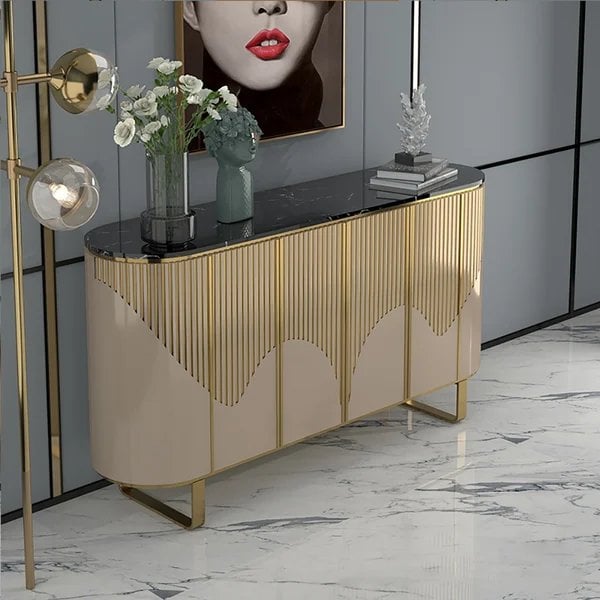
Marble-topped sideboards have gained significant traction in the luxury segment of Indian furniture. These elegant pieces combine the warmth of wooden bases with the sophisticated finish of marble surfaces, creating statement pieces that instantly elevate dining and living spaces.
The Dastkari Marble Top Buffet Sideboard Cabinet exemplifies this category, available in white and brown color combinations at a 50% discount (₹24,999 from original MRP ₹49,998) [2]. Similarly, premium options like the Dune Side Board with Marble Top feature Carrara marble imported from Italy paired with oak wood from the USA, priced at approximately ₹125,999 [3].
What makes marble-topped buffet sideboards particularly appealing is their dual functionality. Beyond standard storage, they excel as serving stations during gatherings and parties. Key features typically include:
- Extended top surfaces designed for food presentation
- Built-in racks for wine bottles and glassware storage
- Temperature-controlled drawers for food storage
- Finishes resistant to spills and stains [1]
If you’re looking for an extensive collection of buffet sideboards with various marble top options, visit us at https://shopps.in/product-category/buffet-table/ where you’ll find designs suited for every interior style and budget.
Contemporary and Minimalist Designs
Contemporary sideboards have carved a significant niche in modern Indian homes where clean esthetics meet practical functionality. These designs typically feature streamlined silhouettes, innovative storage solutions, and mixed material compositions.
Unlike their traditional counterparts, contemporary sideboards embrace geometric precision with minimal ornamentation. Popular living room sideboard styles in this category include:
- Contemporary sideboards with clean lines and minimalist design
- Media sideboards specialized for entertainment equipment
- Modular sideboards offering customizable configurations [1]
The modern minimalist esthetic extends to various finishes and colors. According to retailers, popular options include honey finish (warm and inviting, blending with both modern and ethnic themes), walnut finish (deep, elegant brown tones), teak finish (neutral and earthy, perfect for classic Indian interiors), and wenge finish (bold and contemporary, ideal for minimalistic homes) [4].
Notably, many contemporary designs incorporate mixed materials. The Luna Sideboard exemplifies this trend, blending reclaimed teak with handwoven wicker and fluted glass. This versatile piece features a center cupboard with wicker doors flanked by a taller glass cabinet on one side and open shelves on the other [5].
Consequently, these contemporary designs often serve multiple purposes. A single piece might function as an entertainment unit, storage cabinet, and display space simultaneously [5]. This versatility makes them especially valuable in urban Indian apartments where space optimization is crucial.
Sideboard Tables for Living Room and Kitchen
Sideboard tables designed for specific rooms have evolved to address the unique needs of those spaces. Living room sideboards have become essential furniture pieces in modern Indian homes, striking a perfect balance between storage functionality and esthetic appeal [1].
For living spaces, key features include:
- Multi-compartment storage with organized sections for different items
- Cable management with built-in routing for TV and electronic devices
- Ample top space for displaying decorative elements
- Designs that complement existing furniture [1]
Kitchen sideboards, on the other hand, focus on keeping cooking areas free from stress and clutter. Many kitchen-specific designs offer:
- Glass-fronted cabinets for visibility of contents
- Solid wooden doors for concealing crockery, containers, and cleaning supplies
- Specialized compartments for kitchen essentials [6]
Beyond the kitchen and living room, sideboard tables have found their way into various areas of the home. Bathroom cabinets utilize compact designs to maximize space while maintaining style. Options range from wall-mountable medicine cabinets to under-mount bathroom cabinets [6].
In essence, the versatility of modern sideboard tables allows them to function across multiple rooms. They serve as room dividers in open-plan layouts, creating visual boundaries between functional zones while maintaining an open feel—a particularly valuable quality in contemporary Indian apartments where space is at a premium.
From traditional wooden pieces crafted with intricate detailing to sleek contemporary designs featuring marble tops, the sideboard market in India offers something for every taste, need, and budget. The key lies in identifying which type best complements your space while meeting your specific storage and display requirements.
How
Choosing the perfect sideboard requires careful consideration of several key factors beyond just esthetic appeal. The right piece should seamlessly blend functionality with style while meeting your specific storage needs. Before making this significant investment, let me walk you through the essential steps to finding your ideal sideboard.
Start by measuring twice, buy once. This age-old wisdom applies perfectly to sideboard shopping. Accurate measurements are crucial—mark the intended placement area with tape to visualize the space. For small rooms, consider sideboards between 36–48 inches wide; medium dining rooms work well with 54–66 inch options; while larger living spaces can accommodate pieces 72 inches or more [7]. Remember that your sideboard should never exceed two-thirds of the wall length it sits against [7].
When measuring depth, aim for 14–18 inches—deeper units unnecessarily consume valuable floor space, especially in compact Indian apartments [7]. Height-wise, most sideboards range from 30–36 inches, providing comfortable access and easy styling [7]. Always maintain at least 36 inches of clear walking space in front of your sideboard to ensure smooth movement throughout the room [7].
Identify your primary purpose before browsing designs. Ask yourself: Will this sideboard store dining essentials like crockery and cutlery? House living room electronics and books? Organize entryway items? Or perhaps store bedroom belongings? Your answer will guide your size, depth, and storage configuration decisions [7].
Storage layout deserves more attention than design esthetics. A beautiful sideboard that doesn’t store well quickly becomes frustrating [7]. Consider these storage options based on your needs:
- Closed cabinets: Ideal for crockery, electronics, and household clutter
- Drawers: Perfect for cutlery, documents, and small accessories
- Open shelves: Best used sparingly for display pieces, books, and decorative baskets
The most practical sideboards combine drawers and closed cabinets with minimal open storage [7]. This balanced approach keeps rooms visually clean while providing versatile organization options.
Material selection significantly impacts longevity. Sideboards endure daily use, making solid wood an excellent investment despite the higher initial cost [7]. Solid wood offers superior load-bearing capacity, better humidity resistance, and doesn’t sag over time [7]. For Indian homes, consider Sheesham wood for heavy-duty storage, Mango wood for contemporary designs, and Acacia for moisture-prone environments [7].
Prior to purchasing, evaluate functional details that reveal quality craftsmanship. Inspect drawer runners for smoothness, check hinges for sturdiness, examine panel gaps for evenness, and assess leg or plinth stability [7]. Poor hardware often leads to premature wear regardless of material quality [7].
Placement significantly influences a sideboard’s functionality. In dining rooms, position it against a blank wall and avoid placing it too close to the table [7]. For living rooms, sideboards work beautifully under artwork or mirrors and help organize electronics [7]. In entryways, slim profiles efficiently store essential items like keys and documents [7].
Once installed, proper styling elevates your sideboard from functional furniture to a design statement. Exercise restraint—luxury emerges from simplicity. Effective styling typically includes one statement lamp or vase, a single artwork or mirror above, and minimal decorative objects [8]. Avoid cluttering the surface edge-to-edge; negative space creates a premium feel [7].
Whenever shopping online for sideboards, utilize city-specific filters like “sideboard furniture Jaipur” or “sideboard online Jodhpur” to ensure faster delivery and availability [9]. Before finalizing your purchase, verify the sideboard has solid wood construction, appropriate storage layout, suitable dimensions, a finish matching your interiors, and quality hardware [7].
Cable management features deserve consideration, particularly for media sideboards. If you’ll place lamps, music systems, or electronics on top, ensure the back has openings for wires—otherwise, you’ll need to drill holes yourself [10].
Ultimately, sideboard shopping becomes much simpler when you’ve done proper homework. For an extensive collection of buffet sideboards in various styles and price points, visit us at https://shopps.in/product-category/buffet-table/ where you’ll find designs perfectly suited to Indian homes and lifestyles.
FAQs
Q1. What are the key features of modern sideboards in 2026? Modern sideboards in 2026 combine storage functionality with statement esthetics. They typically feature clean lines, mixed materials, and innovative storage solutions. Many designs include adjustable shelving, soft-close mechanisms, and cable management systems to address contemporary needs.
Q2. How do I choose the right size sideboard for my space? To choose the right size, measure your available space carefully. As a rule of thumb, your sideboard should not exceed two-thirds of the wall length it sits against. For small rooms, consider sideboards between 36-48 inches wide, while larger spaces can accommodate pieces 72 inches or more. Ensure at least 36 inches of clear walking space in front of the sideboard.
Q3. What materials are best for sideboards in Indian homes? Solid wood remains a popular choice for sideboards in Indian homes due to its durability and natural appeal. Sheesham wood is excellent for heavy-duty storage and is naturally resistant to termites and humidity. Mango wood is suitable for contemporary designs, while teak offers superior water resistance, making it ideal for coastal areas.
Q4. How can I style my sideboard to enhance my room’s decor? To style your sideboard effectively, exercise restraint and aim for simplicity. A good approach is to include one statement lamp or vase, a single artwork or mirror above, and minimal decorative objects. Avoid cluttering the entire surface; leaving some negative space creates a more premium feel.
Q5. What should I look for when buying a sideboard online? When purchasing a sideboard online, verify that it has solid wood construction, appropriate storage layout, suitable dimensions for your space, and a finish that matches your interiors. Check for quality hardware and consider cable management features if you plan to use it for electronics. Using city-specific filters can help ensure faster delivery and availability.